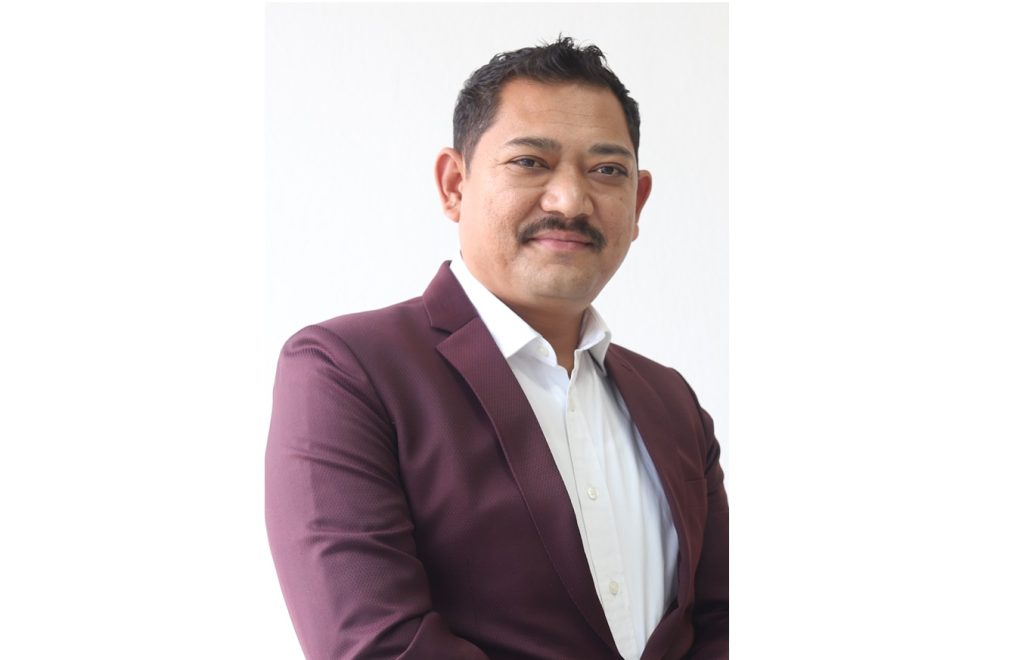
The architect of the cooperative scams, Gitendra Babu (GB) Rai, is thought to be hiding in Malaysia. The Kaski District Court ordered the Department of Passports to cancel his passport on Friday.
Rai is charged with unlawfully transferring billions of rupees in depositor deposits from five different cooperatives throughout the nation to his now-defunct business, Gorkha Media Network.
Since the two nations do not have a bilateral extradition treaty, the Malaysian government is not required to extradite Rai to Nepal, according to Ministry of Foreign Affairs (MoFA) officials.
“We can ask them to extradite Rai back to Nepal because we don’t have an extradition treaty with Malaysia, but they are not required to do so,” Under Secretary (Law) at MoFA Puskar Raj Nepal told Republica.
He went on to say that Nepal only has a law that declares passports invalid, not the authority to cancel them. “The Department of Immigration (DoI) has the authority to halt his travels, but the Department of Passports may declare the passports invalid after receiving the court’s written order,” he stated.
Dharm Raj Joshi, the director of the administration of Internal Affairs, told Republica that the administration does not require a court order to prevent Rai from traveling to and from Nepal. “We can prevent the said individual from traveling to and from Nepal as long as we receive a letter from any relevant authority, whether it be the Ministry of Home Affairs, Nepal Police, or the MoFA,” he stated.
Given that the DoI can only prohibit Rai’s travel to and from Nepal and the foreign ministry can only ask the Malaysian government to extradite him back to Nepal, it would seem that Interpol, the International Criminal Police Organization, is the best organization to assist the Nepali government in repatriating the fugitive. On January 27, 2024, the National Central Bureau (NCB), Nepal, which oversees Interpol-related operations in Nepal, issued a diffusion notice against Rai. Once he was discovered in Malaysia, the warning was raised to a Red notice.
In order to enhance the case for GB Rai’s arrest in Malaysia, Nepal Police spokeswoman Deputy Inspector General (DIG) Dinesh Kumar Acharya told Republica that the NCB, Nepal will notify the NCB, Malaysia of the change in GB Rai’s status following the declaration of his passport as invalid.
“The NCB, Malaysia will have a stronger case to arrest Rai once his passport is deemed invalid,” DIG But Interpol does not have the power to extradite anyone, Acharya stated.
Authorities in that nation must determine whether to arrest and extradite a person who has been discovered there by an Interpol Red Notice in accordance with their own domestic laws and the conditions of any extradition treaties between the participating nations. Information sharing and support for law enforcement agencies in member nations are its primary responsibilities; extradition and other legal procedures are left to national authorities.
In the case filed by the District Government Attorney’s Office (DGAO), Kaski, a single bench of Judge Himal Belbase rendered a final decision on Friday, ordering the Department of Passports to cancel Rai’s passport.
On January 13, a single bench of Judge Nabaraj Dahal postponed the case’s hearing, stating that there was not enough time to reach a verdict. When the police asked the court to revoke Rai’s passport, the court had previously rejected.
Related posts:
 Night flights start at Rajbiraj Airport
 USD 1.5 billion worth of processed buffalo meat will be shipped to China each year
 Nepal’s revenue from the export of IT services increased by 20.28 percent in the first four months of the current fiscal year
 The NRB increases provisions to protect banks from the surge in bad debts
 Investigating Dailekh’s Oil Reserves
 Nepal’s export revenue has increased by 16.5% due to an increase in edible oil exports
 The government passes an ordinance to reimburse depositors from troublesome cooperatives
 The price of cardamom has risen to Rs 110,000 per mann, the highest in 12 years
 Current fiscal year saw a multiplication of bank loans secured by shares
 Operators of jet boats lament the absence of infrastructure
 The government’s budget cap for the next fiscal year is Rs 1.9 trillion
 The Kathmandu Valley is building six substations to increase the electricity