The government is preparing to finalize the investment modality for the Budhigandaki Reservoir-Based Hydropower Project, one of Nepal’s national pride projects.
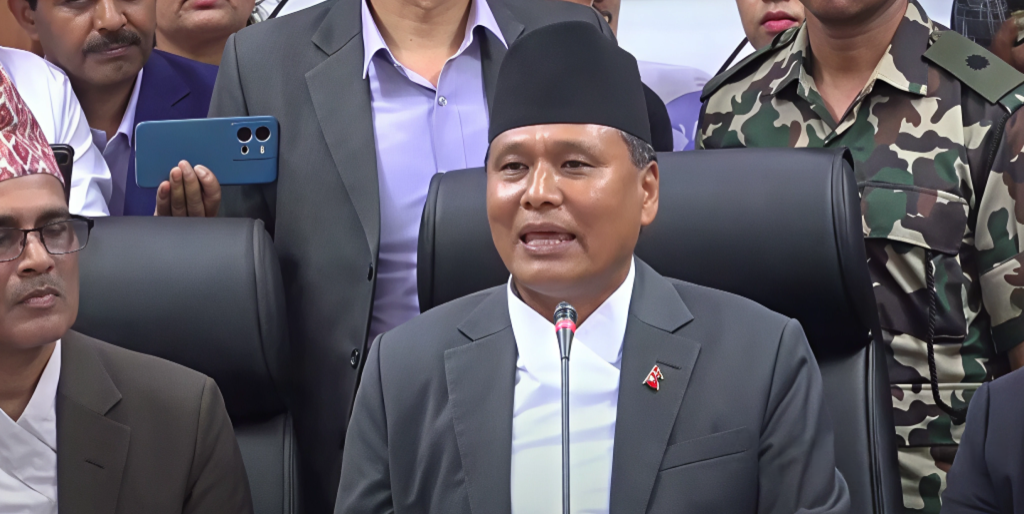
Minister for Energy, Water Resources, and Irrigation Kulman Ghising has emphasized the need to immediately determine the investment modality for the 1,200-megawatt project.
During a discussion with Energy Ministry Secretary Chiranjivi Chataut and officials from Budhigandaki Company Limited, Minister Ghising stated that the project should no longer remain stagnant and that a prompt decision must be made regarding the financial structure.
He urged the company’s management to conduct a financial analysis and promptly submit a report to finalize the investment modality.
Possible Investment Model
Minister Ghising noted that the project could become financially viable if the government provides exemptions on taxes, customs duties, price escalation, and compensation for forest land use and tree clearance.
He proposed that half of the infrastructure tax collected from petroleum imports could be directly deposited into the project’s account, ensuring a steady source of funding.
Ghising also suggested that funds could be raised through a public share offering by the Nepal Electricity Authority (NEA).
“The investment modality should be designed in such a way that the project operates with 50 percent equity and 50 percent loan financing, without imposing a financial burden on the government,” Minister Ghising said.
Project Cost and Financing Options
According to a report prepared by consultants in 2015, the project’s estimated cost was USD 2.59 billion. After recent revisions, the estimated cost now stands at USD 2.77 billion (approximately NPR 332 billion). The construction period has been set at eight years.
The company has proposed two alternative investment modalities — one with and one without the Viability Gap Funding (VGF) from the government:
- Without VGF:
- Equity-to-debt ratio: 25:75
- Government expenditures such as land acquisition would be included as equity.
- The remaining investment would come through concessional loans.
- With VGF:
- Equity-to-debt ratio: 30:70
- The government would provide NPR 73 billion in Very Concessional Loans (VGL) to cover expenses related to land acquisition, infrastructure restoration, environmental conservation, and forest land utilization.
Equity investment would come from the Government of Nepal, NEA, Employees Provident Fund, Citizen Investment Trust, Nepal Telecom, and the general public.
Project Progress and Impact
The Detailed Project Report (DPR) and tender documents are currently under preparation. About 90 percent of land acquisition, considered the most challenging phase, has already been completed.
So far, NPR 42.65 billion has been distributed as compensation to landowners for land, structures, trees, and crops.
The project will physically and economically affect 8,117 households in Gorkha and Dhading districts, out of which 3,560 households will face complete displacement.
Given its proximity to major load centers such as Kathmandu, Chitwan, and Pokhara, the Budhigandaki project holds strategic importance for Nepal’s energy security.
Technical Details
The project involves the construction of a 263-meter-high curved arch dam on the Budhigandaki River along the border of Gorkha and Dhading districts.
The dam will inundate an area of 63 square kilometers, creating a large reservoir. The submergence will affect 14 former Village Development Committees (now 4 rural municipalities and 1 municipality) in Dhading and 13 former VDCs (now 4 rural municipalities) in Gorkha.
The maximum water level of the reservoir will reach 540 meters, generating approximately 3.383 billion units (kWh) of electricity annually.
Besides power generation, the project is expected to bring employment, business opportunities, tourism growth, and fish farming potential in the reservoir area.
Related posts:
 The Kathmandu Valley is building six substations to increase the electricity
 Night flights start at Rajbiraj Airport
 USD 1.5 billion worth of processed buffalo meat will be shipped to China each year
 The NRB increases provisions to protect banks from the surge in bad debts
 Investigating Dailekh’s Oil Reserves
 Nepal’s export revenue has increased by 16.5% due to an increase in edible oil exports
 The government passes an ordinance to reimburse depositors from troublesome cooperatives
 Current fiscal year saw a multiplication of bank loans secured by shares
 The MCC project in Nepal has been “temporarily” halted
 Widespread Paddy Plantation in Hills and Western Tarai, While Eastern Tarai Suffers Drought
 Naima Mobility Expo 2025 Brings Exclusive Festive Deals and New Model Launches
 Tourist Rush in Annapurna and Mustang Surprises Local Businesses