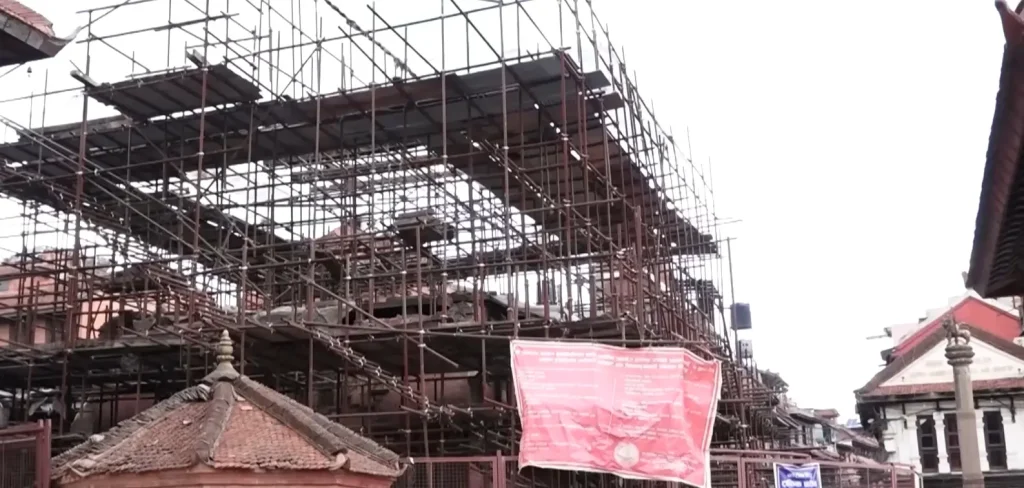
The government has intensified action against non-performing and stalled construction projects (“rugnā āyojanā”), moving to terminate contracts that have remained incomplete for years despite repeated deadline extensions and substantial public spending.
One of the long-delayed projects is the Kamala River Bridge along the Siraha–Dhanusha section of the Postal Highway. The contract was awarded in Jestha 2068 to Pappu Lumbini JV for Rs 249.1 million (including VAT). As per the original agreement, the bridge was to be completed by Mangsir 2071.
Yet, 14 years later, the bridge remains unfinished, even after eight extensions. The contractor has now requested a ninth extension till Asar.
Another national priority project — the Sunkoshi–Marin Diversion Multipurpose Project — has also had its contract canceled. Contractor Patel–Raman JV had failed to progress on critical civil structures, including the dam (headworks), powerhouse, and hydromechanical components.
When the contract period ended, progress stood at only 10 percent. The project had repeatedly issued improvement notices, but the company neither responded nor mobilized resources.
Following the termination, the government has begun the process of seizing Rs 3.6 billion in bank guarantees, including Rs 2.4 billion performance guarantee and Rs 1.2 billion in advance payment guarantee. The original contract, worth Rs 14.8 billion, had been accepted at nearly 32 percent below the estimated cost.
Despite receiving Rs 2.14 billion (around 15 percent of the amount), the contractor executed only 10 percent of the work from Magh 2079 to Asar 2084.
Another major stalled scheme is the Babai Irrigation Project, where six years after awarding contracts (FY 2077/78) to Aman Construction, four of the six packages remain at zero progress, while two have progressed only 30 and 55 percent.
The project repeatedly issued notices, but the contractor neither mobilized properly nor completed the work even by the expiry of the contract. The government is now preparing to cancel these contracts as well.
290 Contracts Identified as Sick
Each year, nearly 2,500 small and large projects receive new contracts. Experts say that if all were completed on schedule, the country’s infrastructure capacity would change rapidly.
However, a chronic pattern of contractors taking contracts but not completing them — coupled with weaknesses in government coordination — has left many projects paralyzed.
For this reason, the government has already issued public notices to terminate 290 sick contracts, including:
- 229 in roads and bridges
- 42 in building construction
- 19 in irrigation
Under Section 59 of the Public Procurement Act (PPA) 2063, contractors have been given 15 days to provide clarifications on why their contracts should not be terminated.
Action After Years of Neglect
Contracts dating back to FY 2067/68 that have remained incomplete are being labeled “sick.” Despite having progressed anywhere from 10 to 90 percent, many have stalled for years.
The new government under the Gen-Z uprising has directed the Ministry of Physical Infrastructure, Urban Development, and Energy/Water Resources/Irrigation to accelerate contract termination and revive stalled projects.
In response, divisions across the country have begun formal termination processes.
The Roads Department’s Kathmandu Division alone has terminated 25 contracts.
Why Do Projects Become Sick?
Physical Infrastructure Secretary Keshav Sharma says that out of 2,500 annual contracts, around 300 become sick due to various reasons:
- contractors abandoning sites
- lack of government coordination
- design flaws
- delays caused by forest clearance or construction materials
- political interference
- weak project management
The government says the aim is not only to cancel bad contracts but also to push capable contractors forward.
Former Secretary Kishore Thapa welcomes the initiative, saying that political interference had previously discouraged officials from terminating problematic contracts. With political backing now available, officials have found the courage to take action.
Former Secretary Devendra Karki, however, says officials always had the authority to cancel contracts under the PPA. He questions whether all sick projects are solely the fault of contractors, or if government weaknesses are also responsible.
Roads Department: 25 Terminated, More Under Review
Roads Department spokesperson Shyam Khadka said 25 contracts have already been terminated.
Out of 84 projects under scrutiny, many contractors have submitted “work plans” promising to re-mobilize resources, while others are nearing final termination.
Smaller contracts (below Rs 200 million) are fully handled by local offices, while large-scale terminations are reported to the Department.
Some projects became sick due to office errors as well — a fact confirmed by Kathmandu’s Federal Road Supervision Office.
Buildings Department: 42 Sick Projects
The Department of Urban Development and Building Construction has marked 42 projects as sick.
Notices have been issued for 37 cases asking why their contracts should not be terminated.
Director General Rabindra Bohara says many contracts lasting two years have remained incomplete for 8–10 years despite multiple extensions.
The Department now plans to recover dues from contractors and move forward with new contracts.
Irrigation: 19 Sick Contracts Including Sunkoshi–Marin
The Irrigation Department is moving to terminate 19 contracts, including six from the Babai Project and one from the Sunkoshi–Marin Diversion, whose contract has already been canceled.
The contractor has been given 14 days to finalize pending matters before the project begins re-tendering for the remaining work.
Government Preparing to Amend Procurement Law
The government is preparing to amend Section 59(8) of the Public Procurement Act 2063, which currently mandates seizing the full security amount and recovering additional costs from non-performing contractors.
The proposed amendment aims to recover only the difference in cost between the old and new contracts — not the full original cost.
Contractors’ associations argue that Section 59(3) also needs amendment, claiming that the government has moved ahead with termination without addressing systemic causes.
What Industry Leaders Say
Ravi Singh, President, Federation of Contractors
“Declaring sick projects is positive, but the process lacks balanced assessment. Nearly 80% of delays were caused by government inefficiency, not contractors alone. Treating all cases alike discourages investment.”
Kishore Thapa, Former Secretary
“Terminating sick projects gives them new life. But systemic issues — design flaws, weak coordination, bureaucracy, political instability, and geopolitical factors — must also be addressed.”
Devendra Karki, Former Secretary
“Project managers already had the authority to terminate contracts. The government itself prolonged sickness by repeatedly extending deadlines. A unified policy is necessary to avoid delays after re-tendering.”
Key Reasons for Contract Termination
- Low progress: many projects stuck at 10–20%
- Absence on site: contractors not present on project locations
- Failure to mobilize resources despite notices
- Projects stalled even at 90% due to contractor reluctance
- Contractors seeking to avoid blacklisting by offering to finish small remaining work
Related posts:
 Guidelines to implement the “Make in Nepal” program have been approved by the government
 Nepal is expected to experience a power outage because India is prepared to provide only 75 MW of electricity throughout the winter
 The NAC Wide-Body Aircraft Corruption Scam will be investigated again
 NRB acquires responsibility for overseeing crisis-ridden The Karnali Development Bank
 339,000 people receive NOC over a four-year period
 The NRB suggests new regulations that would let cooperatives to get bank loans
 The president halts an ordinance pertaining to land, forests, and national parks, citing “sensitive issues”
 Two hackers who increased Bhatbhateni’s tax liability by Rs 68 million are arrested by CIB
 CAAN’s request to prohibit the import of European helicopters is rejected by the Aviation Ministry
 469 Nepali Workers Stranded in Saudi Arabia for Nine Months Still Await Rescue After Company Shut Down
 Nepal Sees Major Fluctuation in Paddy Production Over the Years
 Nepal Lists 148 Varieties of Rice: Growing Demand for Indigenous Rice in Cities